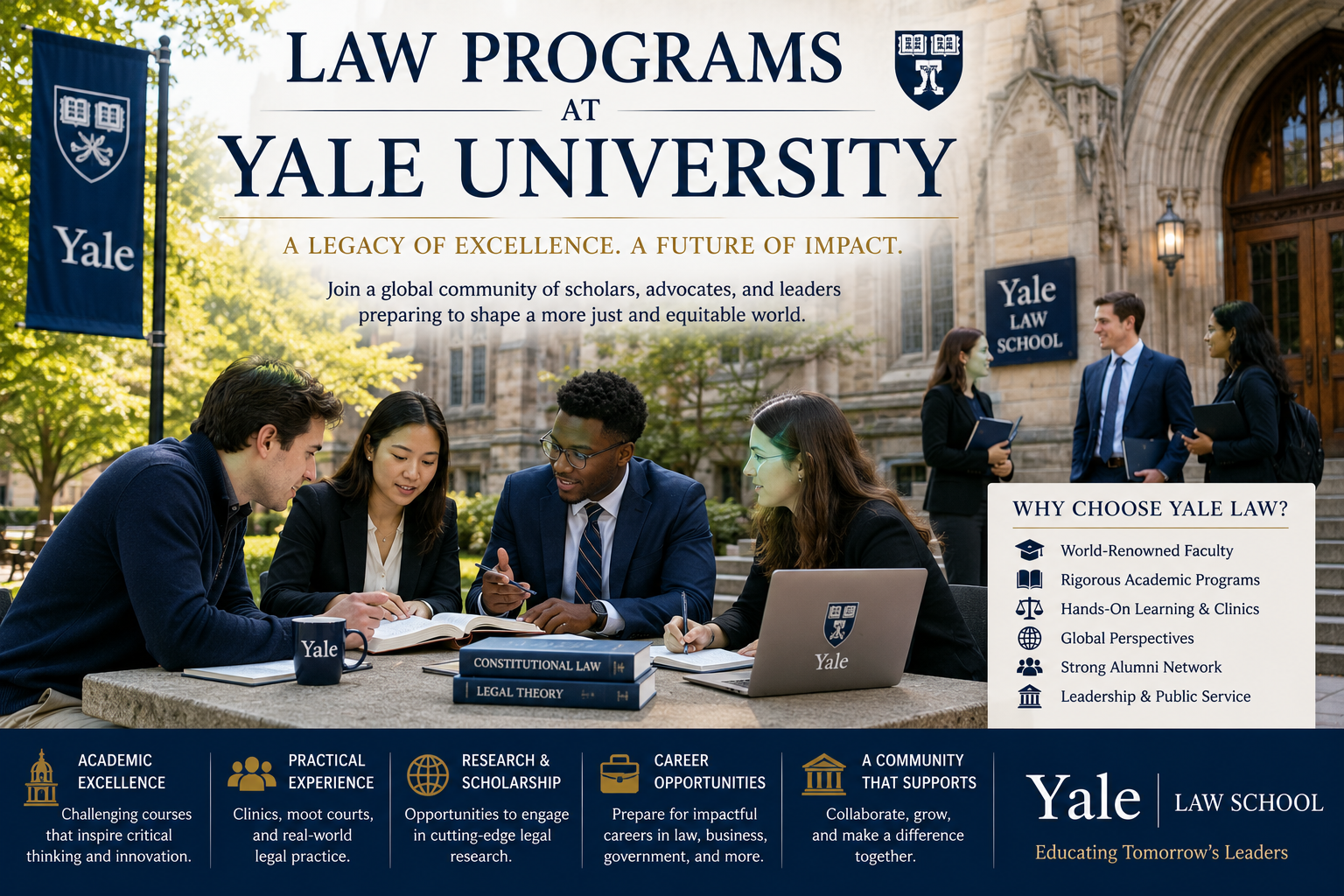

Law Programs at Yale University (2026), A law degree can open the door to careers in legal practice, public service, business, government, academia, and international organizations. Students who study law develop strong analytical, research, communication, and problem-solving skills that are valuable in many professions.
Law Programs at Yale University are widely recognized for their academic excellence, small class sizes, and focus on legal scholarship. Students learn from experienced faculty, participate in research, and explore a broad range of legal topics in a collaborative learning environment.
This guide explains the law programs available at Yale University, admission requirements, student life, research opportunities, and the career paths graduates may pursue.
Why Choose Yale University for Law?
Yale University is known around the world for its commitment to academic excellence and legal education. Students benefit from an environment that encourages critical thinking, independent research, and meaningful discussion.
Some reasons students choose Yale include:
- Distinguished faculty members
- Small class sizes
- Strong academic reputation
- Extensive legal research opportunities
- Modern library resources
- Diverse student community
- Active student organizations
- Career development support
These strengths help students prepare for successful legal careers.
What Students Study
Law students build a foundation in legal principles while developing practical skills for professional work.
Common areas of study include:
- Constitutional Law
- Civil Procedure
- Criminal Law
- Contracts
- Property Law
- Torts
- Legal Research
- Legal Writing
- Ethics
- International Law
Students also improve their ability to analyze legal issues and communicate complex ideas clearly.
Practical Learning Opportunities
Legal education involves more than classroom lectures. Students also gain experience through practical learning.
Opportunities may include:
- Legal clinics
- Moot court competitions
- Research projects
- Case analysis
- Writing workshops
- Public service initiatives
These experiences help students apply legal theory to real-world situations.
Research and Innovation
Research is an important part of the Yale law experience.
Students may work with faculty members on projects related to:
- Constitutional studies
- Human rights
- Environmental law
- International law
- Criminal justice
- Technology and privacy
- Public policy
Research strengthens critical thinking and prepares students for advanced legal careers or academic work.
Experienced Faculty
Students learn from professors who are respected scholars and legal professionals.
Faculty members support students by:
- Leading classroom discussions
- Supervising research
- Providing academic advice
- Encouraging independent thinking
- Mentoring future legal professionals
Small class sizes allow students to interact closely with instructors.
Student Organizations
Student organizations play an important role in campus life.
Law students may join organizations related to:
- Public interest law
- Business law
- International law
- Environmental law
- Human rights
- Legal journals
- Community service
- Professional networking
Joining student groups helps students build leadership skills and professional connections.
Libraries and Learning Resources
Access to quality research resources is essential for legal education.
Students benefit from:
- Comprehensive legal libraries
- Digital research databases
- Quiet study spaces
- Group collaboration rooms
- Academic support services
These resources help students prepare for coursework, research, and future legal practice.
Career Opportunities
Graduates of Yale law programs may pursue careers in many fields.
Common career paths include:
- Attorney
- Judge (after meeting applicable legal and professional requirements)
- Corporate Counsel
- Government Lawyer
- Public Defender
- Prosecutor
- Legal Consultant
- Policy Analyst
- Law Professor
- International Organization Advisor
Some graduates also pursue careers in business, politics, journalism, and nonprofit leadership.
Career Development Support
Yale provides career services that help students prepare for professional opportunities.
Support may include:
- Career counseling
- Resume reviews
- Interview preparation
- Networking events
- Internship guidance
- Employer connections
- Alumni mentoring
These resources help students plan their careers with confidence.
Student Life
Law students balance demanding academics with campus activities and professional development.
Students often participate in:
- Academic seminars
- Guest lectures
- Student organizations
- Volunteer work
- Legal conferences
- Networking events
These experiences enrich both personal and professional growth.
Admission Requirements
Admission requirements vary depending on the law program.
Applicants generally need:
- A completed application
- A bachelor’s degree from an accredited institution (for graduate-level law study)
- Official academic transcripts
- Required application materials
- English language proficiency for eligible international applicants
Prospective students should review the latest admission information before applying.
Tips for Future Law Students
If you are interested in studying law:
- Strengthen your reading and writing skills.
- Practice critical thinking.
- Stay informed about current legal issues.
- Participate in debates or public speaking.
- Develop strong research habits.
- Manage your time effectively.
- Seek opportunities for leadership and community service.
These habits can support success in law school and beyond.
Frequently Asked Questions
Is Yale University well known for law?
Yes. Yale University is internationally recognized for its strong legal education, respected faculty, and emphasis on research and academic excellence.
Do students gain practical legal experience?
Yes. Students may participate in clinics, research projects, moot court activities, and other practical learning opportunities.
What careers can graduates pursue?
Graduates may work in legal practice, government, business, academia, public policy, nonprofit organizations, and international institutions.
Can international students apply?
Eligible international students may apply if they meet the university’s admission requirements and any applicable language proficiency standards.
Final Thoughts
Law Programs at Yale University offer students an outstanding academic environment, opportunities for advanced legal research, and practical experiences that prepare them for a wide range of professional careers. Through experienced faculty, collaborative learning, student organizations, and career development resources, Yale helps students build the knowledge and skills needed for long-term success.
Whether your goal is to practice law, influence public policy, conduct legal research, or lead organizations, studying law at Yale University provides a strong foundation for future achievement.